


Can Improv Classes Help Social Anxiety? An Expert Look Inside the Classroom
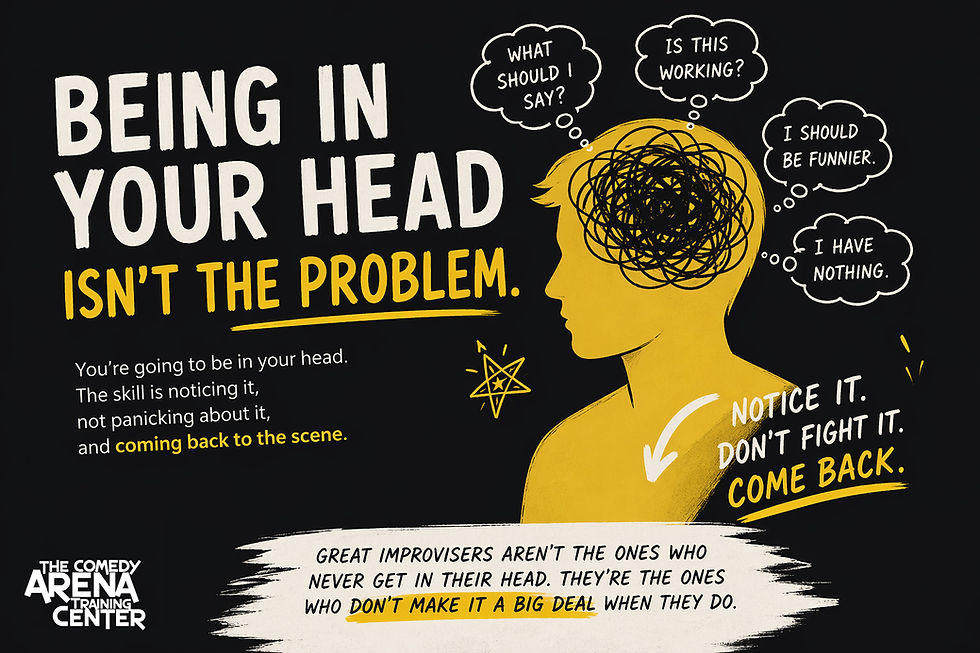
Social anxiety can feel like being trapped in your own head second-guessing every word, worrying you’re saying or doing the wrong thing, and feeling like everyone else got a memo you somehow missed.But what if a classroom existed where every choice you make is considered correct, mistakes are celebrated, and your instincts are seen as valuable contributions?
That’s the environment improv comedy creates and for many people, it becomes a surprisingly powerful antidote to social anxiety.
At The Comedy Arena Training Center, improv instructor and program director Jared Berger, who has been performing since 2009 and teaching since 2010, has seen firsthand how improv can reshape the way socially anxious students relate to themselves and to others.
Here’s what actually happens inside an improv class and why it can make such a difference.
Why Improv Helps: It Quietly Rewrites the “Social Anxiety Script”
Social anxiety thrives on internal stories like:
“I’ll say the wrong thing.”
“Everyone will judge me.”
“I’m not good enough to be here.”
Improv challenges those beliefs not through pressure or performance, but through a supportive, collaborative culture where:
You can’t do it wrong.
Everyone is learning together.
Your ideas matter, even if you don’t believe they do yet.
Instead of teaching students to “be funny,” the focus is on building trust, listening, reacting, and creating something together. And for anxious students, that shift is often transformational.
“All Offers Are Correct”: A Teaching Philosophy That Frees People
One thing that sets The Comedy Arena’s program apart is its foundational philosophy:Every choice, offer, and instinct a student has is correct.
Jared explains that while some choices may be higher or lower percentage, nothing is wrong. The class doesn’t stop to judge or analyze a “mistake.” Instead, everyone immediately builds on it.
What this looks like in practice:
A student blurts out something odd in a scene: “This bakery only sells invisible muffins!” In most settings, they’d panic or feel embarrassed. But in improv?
The class joins in:
“Of course! They’re our bestseller!”
“We’ve been voted #1 by the Imaginary Pastry Awards!”
The “weird” idea becomes a success.The anxious student learns: My instincts aren’t a liability. They’re a superpower when supported.
Over time, this reduces fear of speaking up, making mistakes, or being judged.
Real Students, Real Change
While improv isn't therapy, its effects can feel therapeutic.
At The Comedy Arena Training Center, numerous students have shared experiences like:
Increased confidence
Feeling more comfortable socially
Finally feeling like they “fit in” somewhere
Discovering they’re more creative or spontaneous than they thought
These aren’t isolated stories. They’re patterns Jared sees over and over again in each new class cycle.
Common Breakthrough Moments for Anxious Students
Usually by week 3 or 4, students experience a noticeable shift:
1. Realizing everyone makes mistakes and no one cares.
In fact, the group often celebrates them. This reframes perfectionism and fear of failure.
2. Feeling free to be themselves.
When instincts are consistently validated, students stop censoring and start playing.
3. Understanding they bring value to the group.
Even introverted or quiet students discover their timing, perspective, or subtle humor strengthens the ensemble.
4. Experiencing connection without pressure.
Scenes and exercises naturally build camaraderie, creating a supportive social space without forced “small talk.”
These breakthroughs often spill into everyday life, making social situations less intimidating.
The First-Day Challenge: “I’m Not Good Enough to Be Here”
Most anxious students arrive with a fear that they’re:
Not quick enough
Not funny enough
Not creative enough
Not “smart enough” to do improv
Jared and his team actively dismantle this belief from day one.
How instructors support these students:
Reinforcing that improv is a team sport
Highlighting and building on each student’s natural strengths
Demonstrating how seemingly “small” choices can create huge comedic moments
Modeling vulnerability by making mistakes themselves
Students quickly learn that improv isn’t about being witty. It’s about showing up and saying yes to the moment.
Is Improv for Everyone With Social Anxiety?
In Jared’s experience, improv welcomes and benefits almost everyone with social anxiety because:
It redirects the mind away from overthinking
It provides evidence that social missteps aren’t catastrophic
It builds connection in a structured, supportive format
It creates playful experiences that counter anxious assumptions
While improv isn't a replacement for clinical treatment, it can be a powerful complement, especially for people who spend a lot of time in their heads believing negative self-stories.
As Jared puts it: “Those with social anxiety are often making up things which aren’t true and that’s really what improv is all about. We make things up all the time, but we do it together, in a positive way.”
Final Thoughts: Improv Gives People Permission to Be Human
Improv doesn’t fix social anxiety overnight, nor does it promise to eliminate fear. But it does give students a safe space to practice being present, taking small risks, connecting with others, and discovering they are more capable than they realize.
And in a world where people feel increasingly isolated or self-conscious, that kind of experience can be life-changing.
If you’ve ever wondered whether improv classes can help with social anxiety, the answer, from years of watching students transform, is a resounding:
Yes. Absolutely. And maybe even more than you expect.


Comments